Lower Harbour channel reaches 14m
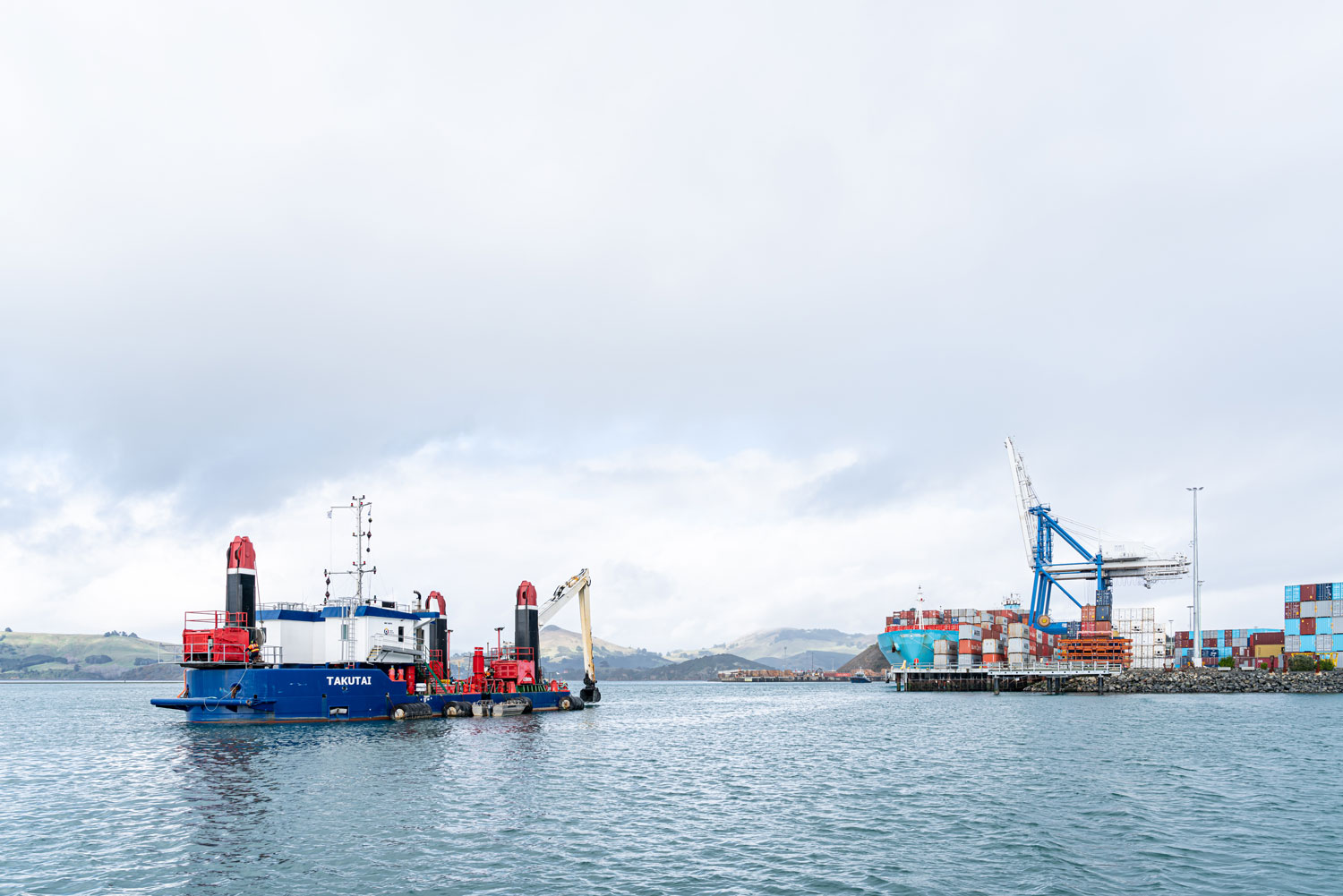
Port Otago has officially reached 14m chart datum in the Otago Lower Harbour channel.
Planning for bigger ships started in 2013, following the Next Generation consenting process that permitted Port Otago to deepen to 15m. In 2013, chart datum was 12.5m. The in-house dredging team achieved 13.5m in 2021 and confirmed the 14m mark last month.
Port Otago Chief Executive Kevin Winders says 14m allows the port to accommodate mid-sized container vessels (up to 10,500 TEU). “This provides options for our shipping lines, when planning network changes or when ad hoc calls are required. Importantly, it also allows them to maximise loadings on existing services, thus reducing cost and carbon per TEU and improving efficiency for our regional exporters.
“While achieving 14m is a major milestone, our team is back to dredging as usual, with an eye on 15m, which we’re likely to need the future.”
Port Otago GM Marine and Infrastructure Grant Bicknell says channel deepening is one of three key infrastructure elements required to be “big ship capable”. “The arrival of the $15 million Tug Ōtepoti in February provided the second 70t bollard pull tug needed to manoeuvre large vessels in the Port Chalmers Container Terminal basin. The third element is the replacement $36 million trailing suction hopper dredge, jointly owned with Napier Port, which is on track for a December delivery.”
Grant says that owning and operating the dredging fleet in-house underpins Port Otago’s goal of being New Zealand’s “always open” port. “We’re not waiting in a queue for an international dredging contractor. We can deepen steadily to our own programme and, if an extreme weather event moves material into the channel, we can clear it quickly. From the shipping lines’ perspective, that reliability matters just as much as the depth number does.”
Separate but related investments currently underway include Southern Link inland port development, Dunedin Bulk Port redevelopment, infrastructure projects to increase the Port Chalmers Container Terminal capacity, and the Aramoana mole strengthening project.